

Best Natural Skincare for Fungal Acne: Safe Ingredients and Science

If you have tiny, itchy bumps on your forehead, chest, or back that refuse to clear up with traditional acne treatments, you might not be dealing with acne at all. You could be experiencing Malassezia folliculitis, commonly known as fungal acne. Finding the best natural skincare for fungal acne requires understanding exactly what this condition is, and more importantly, what the yeast that causes it likes to feed on.
What is Fungal Acne? The Science Behind Malassezia
Fungal acne is technically a misnomer. It is not caused by the P. acnes bacteria responsible for typical acne vulgaris. Instead, it is an overgrowth of Malassezia, a type of yeast that naturally lives on everyone's skin. When this yeast multiplies out of control within the hair follicles, it causes an inflammatory reaction resulting in uniform, itchy papules. A study published in the National Institutes of Health notes that Malassezia folliculitis is often misdiagnosed as traditional acne, leading to frustration when standard treatments fail to work.
Unlike bacterial acne, fungal acne does not respond to antibiotics. In fact, taking antibiotics can actually trigger fungal acne by wiping out the beneficial bacteria that normally keep the yeast in check. The yeast thrives in hot, humid environments, which is why breakouts often occur after excessive sweating or wearing occlusive clothing.
The Lipid Connection: What Feeds Fungal Acne?
To build a natural skincare routine that is fungal acne safe, we must look at what Malassezia eats. This yeast is lipophilic, meaning it feeds on lipids (fats). Specifically, in vitro studies have shown that Malassezia requires exogenous fatty acids with carbon chain lengths between C11 and C24 for growth. This is a critical finding because it means many plant oils and fatty ingredients — even natural ones — can feed the yeast and worsen the condition.
Fatty acids that are known to feed Malassezia include: lauric acid (C12), myristic acid (C14), palmitic acid (C16), stearic acid (C18), and oleic acid (C18:1). This means that many popular natural oils including coconut oil, olive oil, sunflower oil, and shea butter can be problematic for fungal acne-prone skin, despite their otherwise beneficial properties.
Safe Natural Skincare Ingredients for Fungal Acne
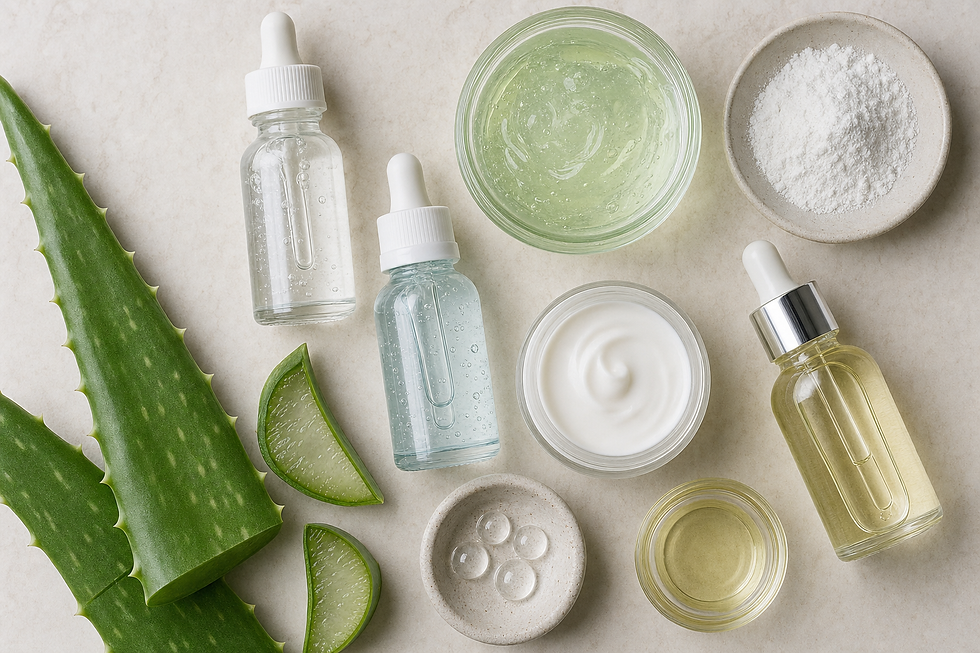
The good news is that several highly effective natural skincare ingredients are completely safe for fungal acne-prone skin. Here is what the science says about each one:
Niacinamide (Vitamin B3) is one of the safest and most effective ingredients for fungal acne-prone skin. It does not contain fatty acids and cannot feed Malassezia. Research published in the International Journal of Dermatology has shown that niacinamide reduces sebum production, minimises pore appearance, and strengthens the skin barrier by stimulating ceramide synthesis. It also has anti-inflammatory properties that can help calm the redness associated with fungal acne breakouts.
Hyaluronic Acid is a humectant that draws moisture from the environment into the skin. It is a polysaccharide, not a lipid, so it cannot feed Malassezia. Studies have shown that topical hyaluronic acid at 0.1% concentration can increase skin hydration by up to 134% after 8 weeks of use. It is an excellent hydrating ingredient for fungal acne-prone skin that needs moisture without oil.
Squalane (not squalene) is a hydrocarbon derived from olives or sugarcane. Unlike plant oils, squalane does not contain the fatty acid chains that feed Malassezia. It is non-comedogenic, lightweight, and mimics the skin's own sebum without feeding yeast overgrowth. It is considered one of the safest emollient ingredients for fungal acne-prone skin.
Aloe Vera Gel is rich in polysaccharides, enzymes, and vitamins A, C, and E. It has documented anti-inflammatory and antimicrobial properties. Aloe vera does not contain significant amounts of the fatty acids that feed Malassezia, making it a safe and soothing choice for fungal acne-prone skin.
African Black Soap is a traditional West African cleanser made from plant-based ash and unrefined oils. Research has shown it has antifungal properties due to its alkaline pH and the presence of polyphenols from cocoa pod ash. Its lauric acid content from palm kernel oil means it should be used with caution, but as a rinse-off cleanser, brief contact time minimises the risk of feeding Malassezia.
Ingredients to Avoid with Fungal Acne
When building a fungal acne safe skincare routine, the following ingredients should be avoided or used with caution: coconut oil (high in C12 lauric acid), olive oil (high in C18:1 oleic acid), sunflower oil (high in C18:2 linoleic acid), shea butter (high in C18 stearic acid), argan oil, rosehip oil, and most plant-based facial oils. Fermented ingredients can also sometimes trigger fungal acne as fermentation processes can produce fatty acids.
Mayka Skincare Products Safe for Fungal Acne
Our Niacinamide & Nettle Toner is formulated with 5% niacinamide and nettle extract. It is free from the fatty acids that feed Malassezia, making it an ideal step in a fungal acne safe routine. The niacinamide helps regulate sebum, reduce inflammation, and strengthen the skin barrier.
Our African Black Soap (100g) used as a rinse-off cleanser can help manage fungal acne due to its antifungal properties. As a cleanser, it is washed off before it can significantly feed the yeast.
Building a Fungal Acne Safe Routine
A simple, effective fungal acne safe natural skincare routine should follow these steps: First, cleanse with a gentle, low-oil cleanser such as African Black Soap or a simple foaming cleanser. Second, tone with a niacinamide-based toner to regulate sebum and reduce inflammation. Third, treat with a hyaluronic acid serum for hydration without oils. Fourth, moisturise with a squalane-based or ceramide-rich moisturiser that is free from long-chain fatty acids. Always patch test new products and introduce them one at a time.
References
1. Prohic A, et al. Malassezia species in healthy skin and in dermatological conditions. International Journal of Dermatology, 2016. PMC3970831.
2. DeAngelis YM, et al. Three etiologic facets of dandruff and seborrheic dermatitis: Malassezia fungi, sebaceous lipids, and individual sensitivity. Journal of Investigative Dermatology Symposium Proceedings, 2005.
3. Levin J, Momin SB. How much do we really know about our favorite cosmeceutical ingredients? Journal of Clinical and Aesthetic Dermatology, 2010.


Comments